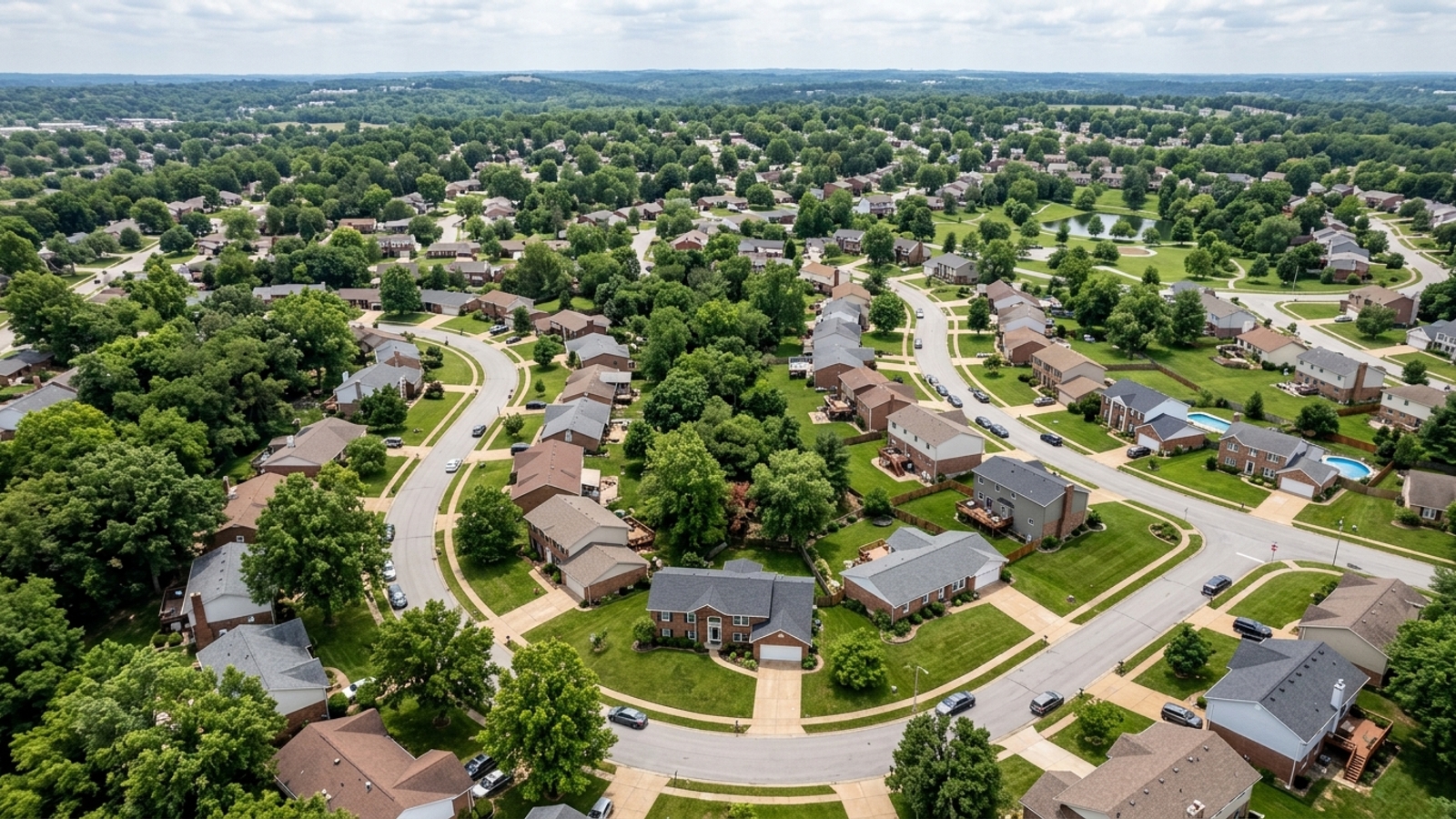
Oakville sits in south St. Louis County - an unincorporated census-designated place, not a traditional city with a downtown core. That distinction matters when you're buying a home in Oakville, MO because the area is defined by its individual residential developments rather than any central grid. Dozens of subdivisions spread across the 63129 ZIP code, most of them built from the 1970s onward, and finding the right fit means getting familiar with specific pockets rather than broad neighborhood names.
The market moves fast. Homes are spending roughly 12 days on the market before going under contract, the median sale price sits at around $357,300, and active inventory hovers at about 36 homes at any given time - less than one month of supply. Competition has stayed steady into late 2026. Knowing how the subdivisions are organized before you start touring saves you time and keeps you from losing a house while you're still getting your bearings.
How Oakville is Laid Out
With a population somewhere between 36,000 and 51,000 residents depending on which ZIP code boundaries you draw, Oakville doesn't have a single platted layout. It's a collection of smaller residential subdivisions stitched together across the 63129 ZIP code. On mapping sites, some of these areas show up with numerical labels like "Oakville-2428," while others carry formal names - Crystal Lake Subdivision, Oakbriar Meadows, and so on.
The Mississippi River forms the eastern and southern boundary of the community, which directly shapes where residential development can and can't go. Commuters heading to downtown St. Louis or elsewhere in St. Louis County rely on nearby highways to get there. Most of what you'll find on the market is detached single-family homes, though some attached properties exist in newer developments.
St. Louis County Context
Oakville shares its borders with other south county communities - Mehlville, Concord, and Lemay. The green spaces scattered throughout the area aren't just amenities; they function as natural boundaries between subdivisions, which gives the community a less densely built feel than you'd find closer to the city. When buyers start narrowing down their search, proximity to those county parks often becomes a real factor in which subdivision ends up winning.
Mapping Your Home Search
Pull up a map of Oakville and you'll see a dense network of suburban streets winding between major county parks and the riverfront. Some subdivisions sit near the river bluffs; others are positioned further inland, closer to commercial corridors. It's worth plotting out the areas you're interested in early - daily driving distances to grocery stores and highway on-ramps can look shorter than they feel at rush hour.
The street layouts shift depending on when a section was developed. Older parts of Oakville tend toward more traditional grid patterns. Subdivisions built after the 1970s lean heavily on cul-de-sacs and curving roads. A quick look at the map also clarifies which parts of the 63129 ZIP code actually fall within Oakville and which belong to neighboring communities - that line isn't always obvious from a listing address alone.
Areas Near the River and Parks
Several subdivisions sit close to landmarks worth knowing about. Jefferson Barracks Historic Park covers 425 acres and includes historic museums, trails, and a National Register of Historic Places designation. Cliff Cave County Park, Bee Tree Park, Sylvan Springs County Park, and Suson Park anchor different corners of the community. Where you land relative to these parks will shape your day-to-day experience of the area more than most other factors.
Home Types and Prices Across Subdivisions
The median sale price in Oakville is approximately $357,300 as of mid-2026. Homes here regularly sell above list - the average sale-to-list ratio is running around 102%. With only about 36 homes in active inventory at any given time, you don't have the luxury of sitting on a decision when something checks your boxes.
Housing styles run from mid-century ranch homes to larger multi-story properties built in recent decades. Price within that range depends on the subdivision, lot size, and whether the home has been updated. Attached homes and townhomes show up occasionally and offer a different entry point into the local inventory if detached single-family isn't your only option.
Established Subdivisions
Crystal Lake Subdivision and Oakbriar Meadows are good examples of what the typical Oakville housing stock looks like - detached single-family homes on standard suburban lots, mature trees, established streetscapes. Because most of the construction started in the 1970s, you'll find a mix of original floor plans and renovated interiors on the same street. That variety can work in your favor if you're handy, or it means paying attention to what's actually been updated before you make an offer.
Local Schools and Public Data
If you want crime statistics for a specific subdivision, the St. Louis County Police Department crime map is the right tool. It's accessible through the county's official website and mirrors data through the county's ArcGIS-based municipal crime map, so you can search by specific streets or addresses rather than relying on broad area summaries.
Property taxes and utility providers are handled at the county level since Oakville is unincorporated. Tax rates and boundary lines can vary depending on exactly where a home sits within south St. Louis County, so verify the specifics for any property you're seriously considering - don't assume they're identical across the ZIP code.
Mehlville School District Zones
Public school attendance in Oakville falls under the Mehlville School District (Mehlville R-IX), which covers the unincorporated communities of Mehlville, Oakville, Concord, and Lemay. Most buyers in Oakville will be looking at Oakville Middle School and Oakville High School as the likely assignments, but you should confirm using the official district attendance-zone maps with the actual property address. Don't rely on what a neighbor's kid attends - the lines matter, and they're worth checking directly.
Frequently Asked Questions
Which neighborhoods in Oakville, MO are the most affordable for first-time homebuyers?
Affordability here depends more on the specific subdivision and property size than on any one area you can point to on a map. Homes below the $357,300 median sale price tend to show up in older developments built during the 1970s. Reviewing recent sales in areas like Oakbriar Meadows or the numerically labeled pockets gives you a clearer picture of where lower-priced options are landing.
What are the most expensive luxury subdivisions in Oakville?
There's no single designated luxury subdivision in Oakville, but larger properties near the Mississippi River or the major parks tend to command higher prices. Homes with significant square footage or recent renovations regularly sell well above the area's median. If high-end listings are what you're tracking, monitor the broader 63129 ZIP code rather than trying to narrow it to one named subdivision.
Which Oakville neighborhoods offer the quickest commute to downtown St. Louis via I-255?
Subdivisions in the northern and western sections of Oakville sit closest to I-255 and the other major highways. Before you commit to a specific address, pull up a map and count the stoplights between that driveway and the on-ramp - it's a small thing that adds up quickly on a daily commute.
Are there any neighborhoods in Oakville I should avoid due to Mississippi River flood zones?
Because Oakville borders the Mississippi River to the east and south, some properties closer to the water or near Cliff Cave County Park may fall within designated flood zones. Review the official FEMA flood maps and ask your agent to help you determine whether a specific address would require flood insurance before you get too far down the road on a particular property.
Do the most popular subdivisions in Oakville, MO typically have strict HOAs and high fees?
It varies, and it varies a lot depending on when the subdivision was built. Newer developments are more likely to have active homeowners associations. Older 1970s subdivisions like Crystal Lake Subdivision may operate under different guidelines. Review the specific HOA documents for any property before you close - what applies to one street doesn't necessarily apply to the next.
Which Oakville neighborhoods are best for retirees or empty nesters looking for low-maintenance homes?
If low-maintenance living is the priority, focus your search on the attached homes and townhomes scattered throughout Oakville. They're not the majority of the housing stock here - detached single-family homes dominate - but smaller properties with less yard upkeep do come available in the local inventory. You may need to be patient, but they're out there.