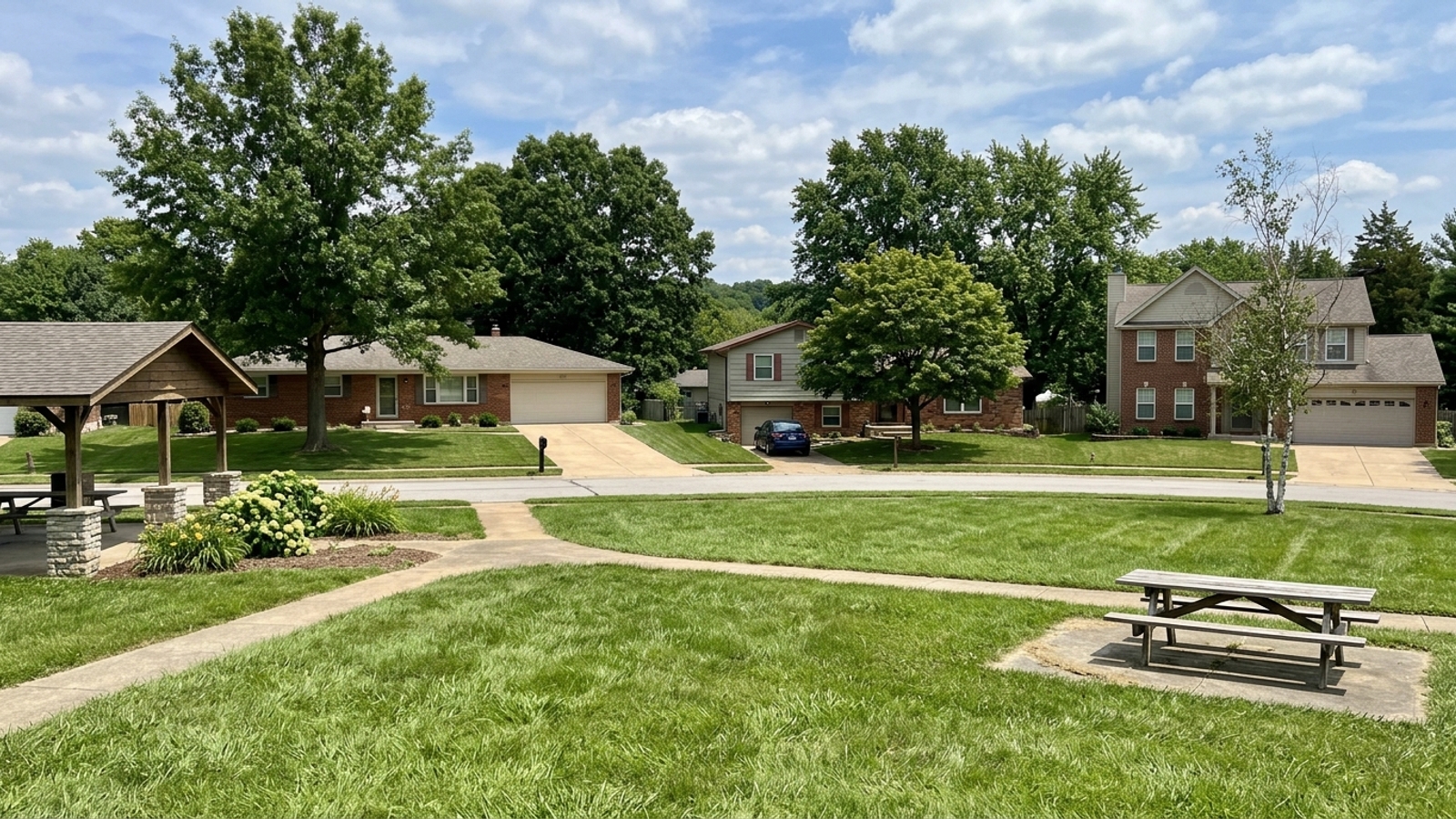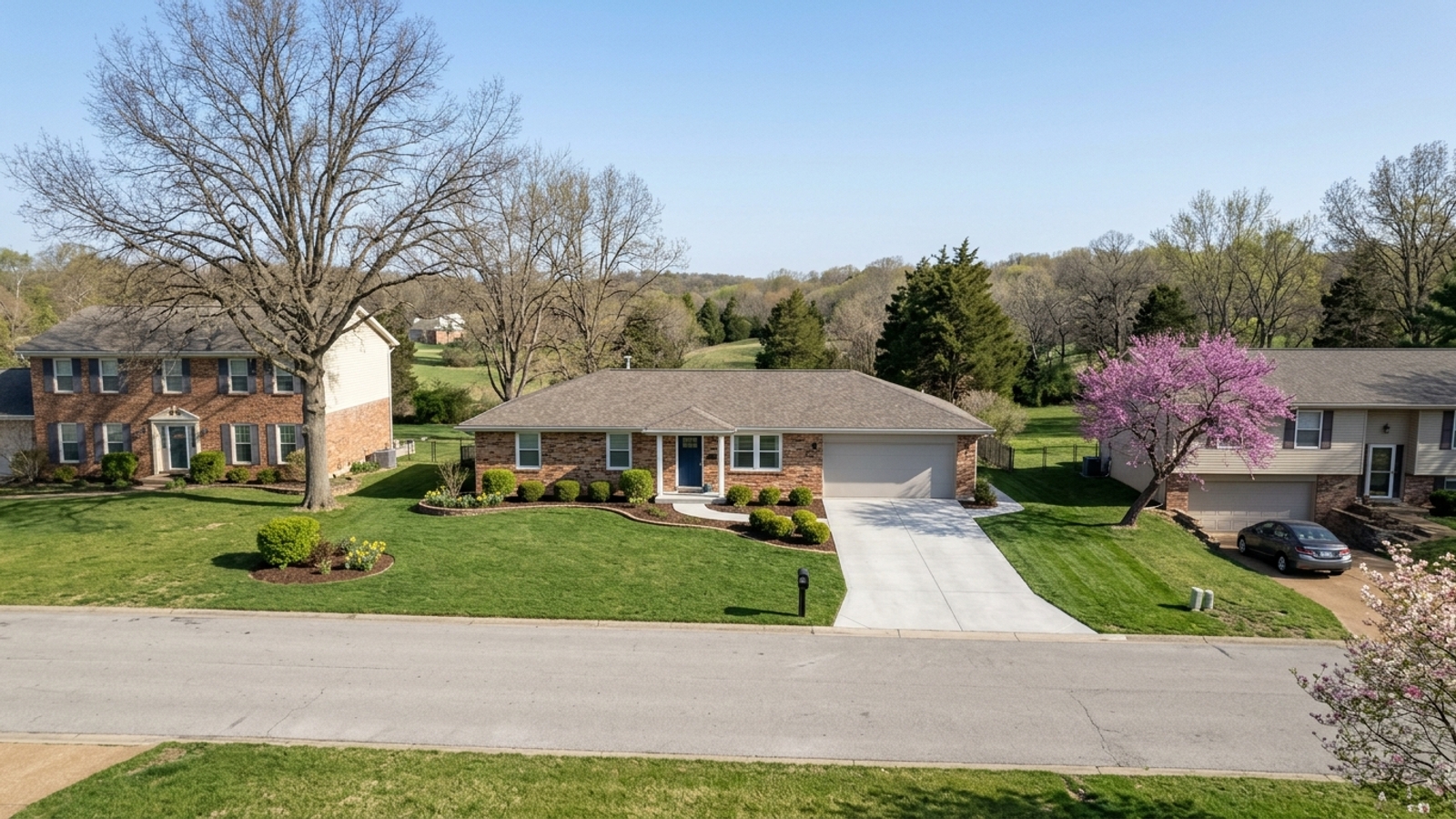
Single-family homes in Oakville are selling for a median of $398,041, and buyers are paying over list price on average. With just 1.1 months of supply on the market, buyers are competing for sound, move-in-ready properties, not holding out for perfect finishes.
The money that moves your sale price goes toward repairs a buyer's inspector would flag and cheap presentation. Big remodels don't pay back dollar-for-dollar here, because buyers aren't requiring brand-new finishes before they go over asking.
Key Takeaway
Spend first on repairs an inspector would flag, then on low-cost presentation: paint, lighting, curb appeal. Homes in Oakville are selling in a median six days, so buyers are already paying for sound houses as they stand. If a large repair can't be avoided, compare the cost of doing it against a repair credit or an as-is sale before you hire anyone.
Who This Guide Is For
You own a home in Oakville and you're deciding which projects, if any, are worth paying for before you list.
Does Improving Your Home Raise Its Value in Oakville?
Single-family homes here are selling above list price with only 1.1 months of supply. Buyers are competing for scarce, sound houses rather than paying extra premiums for luxury finishes.
The median single-family price rose 6.1% over the past year. At that median, the market added roughly $23,000 in value without owners lifting a hammer. That's more than most mid-range projects return.
What raises your sale price is removing reasons for a buyer to discount the house. You can review our Oakville market trends page to see how these numbers shift over time.
Which Projects Should You Do Before Selling?
Are you listing within the next six months? Stick to repairs that protect your sale price and low-cost updates that help the home show well. If you're staying for years, a remodel can be judged on your own enjoyment, but big projects rarely pay back before a sale.
Would a buyer's inspector flag the roof, heating and cooling, basement water, or wiring? If you're unsure, start with a pre-listing inspection and work through the repairs section before touching finishes.
Does a project cost more than buyers here are already paying over asking? Read the worked example in the credit or as-is section before you commit. And if you don't have the time or cash to manage contractors before listing, go straight to offering a repair credit or selling as-is.
Repairs That Protect Your Sale Price
In a tight market with minimal inventory, buyers forgive dated finishes far more readily than a failing furnace or a leaking roof. When a buyer's inspector finds a material defect, the buyer usually asks for a price reduction, or walks. Fixing these issues beforehand removes the negotiating ground to push your price down.
The repairs below are the ones most likely to threaten a deal in St. Louis County.
Get a Pre-Listing Inspection
An inspection before listing tells you exactly what a buyer's inspector will find. You can then choose to fix, price, or credit those items on your own terms instead of scrambling under a contract deadline.
What you learn generally has to be disclosed to future buyers. The standard Missouri seller's disclosure form expects you to disclose known material defects, and the inspection is an upfront cost even if you decide to fix nothing.
Roof and Gutters
Roof age and condition affect the buyer's insurance and lender approval as well as the home's appearance. Distinguish between basic repairs, like fixing flashing or replacing downspouts, and a full replacement.
A full replacement rarely returns its cost at sale. If the roof works but is old, a credit or a price that reflects its age can beat paying for a new roof out of pocket. Ask your homeowners insurer how roof age affects your coverage or premiums, because a buyer's insurer will ask the same question.
Heating, Cooling and Water Heater
In St. Louis summers and winters, a buyer's inspector will test the furnace and air conditioner and note their age. Servicing and documenting these systems removes an objection cheaply. Gather install dates and service records for the furnace, AC, and water heater to show prospective buyers.
A new system is invisible on a showing and rarely lifts the price on its own. It mostly prevents a discount. Replacing a working unit is usually money you won't see again, so replace only what's actively failing.
Basement Water and Drainage
Oakville housing is overwhelmingly single-family, and basements are common. Order your fixes from cheap to expensive: start with downspout extensions, grading, and a sump pump check before moving to crack repair or foundation work.
Cheap drainage fixes help, but structural repair is expensive. The standard Missouri seller's disclosure form asks about past water leakage or dampness, so the history still has to be disclosed after it's fixed. Keep receipts and any structural engineer's report to show buyers the issue was resolved correctly.
Electrical, Plumbing and Lead Paint
Look up your home's year built in the St. Louis County assessor record. For homes built before 1978, sellers must give buyers a lead-based paint disclosure and pamphlet under the federal EPA and HUD rule. That disclosure applies whether or not you renovate.
Fix safety items an inspector flags: ungrounded outlets, missing GFCIs near water, active leaks. Opening walls in an older home can uncover more work than you budgeted, so stick to targeted safety repairs.
Low-Cost Updates That Help Your Home Show Well
Currently, 55.3% of single-family homes in Oakville sell above list price, which means close to half don't. In a market where most homes sell fast, presentation and pricing are what separate the over-asking sales from the rest.
These updates make rooms look larger and newer in listing photos, and they're the cheapest way to attract multiple offers without taking on construction debt.
Paint and Lighting
A neutral repaint of high-traffic rooms, patched drywall holes, and consistent-color-temperature bulbs swapped in for dated fixtures: that combination is the cheapest way to make a house feel maintained.
Paint won't rescue a mispriced house or cover an inspection problem. Bold colors may also need a second coat of neutral to cover them completely.
Front Door, Garage Door and Curb Appeal
The 2025 Cost vs. Value Report found that garage door replacement was the top return-on-investment project in every U.S. region. In the West North Central region, a garage door replacement recouped over 200% of its cost.
Beyond that: lawn edging, fresh mulch, trimmed shrubs, clean house numbers, a swept walkway. Curb appeal wins the first impression only. It does nothing to fix a finding in the buyer's inspection report.
Floors and a Deep Clean
Refinishing hardwood floors recovers roughly 147% of its cost, according to the 2022 National Association of Realtors Remodeling Impact Report. If you have carpets, have them professionally cleaned rather than replaced outright.
A deep clean, including windows, grout, and appliances, is the lowest-cost item on this list. Replacing flooring throughout the house crosses into remodel territory, so refinish or clean where you can and replace only damaged rooms.
Big Remodels That Rarely Pay Back Before a Sale
A major remodel mostly converts your cash into a buyer's preference. In a market where values are already rising, large construction projects rarely return 100% of what you spend on them. If you're selling soon, avoid tearing out functional spaces, and evaluate these carefully before you sign a contractor agreement.
Kitchen Remodels
A badly dated or broken kitchen does weigh on showings. The middle ground is a targeted refresh: painted cabinets, updated hardware, new faucets, better lighting.
A minor kitchen remodel recoups a larger share of its cost than a major one, per Cost vs. Value research. A full remodel costs money you should check against the credit option. Get at least two contractor bids for any large repair before choosing between fixing and offering a credit.
Finished Basements and Additions
At the single-family median of $172 per square foot, it's tempting to think finishing 500 square feet of basement adds $86,000 to your sale price. It doesn't work that way. Fannie Mae appraisal rules exclude below-grade finished space from gross living area, and it's valued on a separate line, so the naive math overstates what you get back.
Additions need permits, change your assessment, and take months to complete. Pull permit history for past basement finishes, additions, or decks from St. Louis County before listing. Unpermitted work can surface during the sale.
Bathroom Remodels
Fix function first: repair leaks, replace caulk and grout, fix the ventilation fan, swap a cracked fixture. A broken or water-damaged bath invites low offers, so the functional fix isn't optional.
A full remodel or added bathroom is rarely recouped at sale. Replace what's broken, clean the rest, and let the next owner pick their own tile.
Should You Fix It, Offer a Credit, or Sell As-Is?
Based on the all-homes sale-to-list ratio of 102.4%, a home listed at $375,000 sells for about $384,000, roughly $9,000 over asking. If a repair bid costs more than buyers are already bidding up, a credit or price adjustment may net more than doing the work. Compare these paths before you start tearing up the house.
Offering a Repair Credit
A credit at closing or a price reduction lets the buyer handle the repair after they move in. Compare the credit with your contractor bid and with the time it takes to complete the work.
Fannie Mae limits interested-party contributions as a percentage of price, depending on the buyer's down payment and occupancy. Some buyers' lenders, particularly for FHA or VA loans, require certain safety or habitability repairs completed before closing, and a credit can't replace those. Ask the buyer's lender early whether any repairs must be done before closing.
Selling As-Is
Selling as-is means no repairs, not no disclosure. You still have to disclose known defects. In a market with limited supply, an as-is listing on the open market can still draw multiple buyers.
You can also review our selling in Oakville page to understand how cash investor offers work. Cash investor offers are built to leave room for repairs and profit, so they generally land below what the same house fetches on the open market. Compare any cash offer with recent comparable Oakville sales before signing.
How to Get a Home Value Estimate Before You Spend
Before committing to any project, get a comparative market analysis based on recent Oakville single-family sales. A local analysis shows what similar homes in similar condition sold for, which reveals whether a project closes a real gap.
Online estimates don't see the condition of your roof or your kitchen. Frank Krajczar can prepare a comparative market analysis and walk the house with you to sort your repair list.
Oakville Home Values at a Glance
These are Redfin figures for the 90 days ending September 30, 2026, and condos and townhomes are omitted due to a small sample size. You can review our Oakville housing market page for long-term trends and our ZIP codes page for area breakdowns.
- Median sale price, all homes: $384,817 (90 days ending 2026-09-30, 121 sales)
- Median sale price, single-family: $398,041 (90 days ending 2026-09-30, 116 sales)
- Year-over-year change in median sale price: +6.9% all homes, +6.1% single-family (90 days ending 2026-09-30)
- Median days on market: 6 for all homes and for single-family (90 days ending 2026-09-30)
- Sale-to-list ratio: 102.4% all homes, 102.6% single-family (90 days ending 2026-09-30)
- Share sold above list price: 52.9% all homes, 55.3% single-family (90 days ending 2026-09-30)
- Months of supply: 1.4 all homes, 1.1 single-family (90 days ending 2026-09-30)
- Homes for sale (inventory): 56 all homes, 41 single-family (90 days ending 2026-09-30)
- Median price per square foot: $171 all homes, $172 single-family (90 days ending 2026-09-30)
- Condos and townhomes: fewer than 10 sales in the window, so no separate figures are reported
Oakville Home Value FAQs
Do Homes in Oakville, MO Increase in Value over Time?
Yes, the median sale price for all homes rose 6.9% year over year over the 90 days ending September 30, 2026. Looking at the wider region, the FHFA All-Transactions Index showed a 40.55% five-year change for the St. Louis MSA as of the second quarter of 2026. Past gains don't guarantee future ones, and this is not financial advice.
Do All Homes in Oakville Go Up in Value?
No, a rising median doesn't mean every house rises equally. During the 90 days ending September 30, 2026, 52.9% of all homes sold above list, which means nearly half didn't. Compare your home with recent sales in similar condition.
Does Solar Increase Home Value in Oakville, MO?
It depends on whether you own or lease the panels. A 2015 Lawrence Berkeley National Laboratory study found buyers paid roughly $15,000 more for homes with typical 3.6 kW host-owned solar systems, though this is a national finding and the premium depreciates as systems age. If you have solar panels, confirm whether they're owned or leased, and if leased, ask the provider for the transfer terms a buyer must accept.
Do I Need a Permit for Home Improvements in Oakville, MO?
Yes, for many projects. Oakville is in unincorporated St. Louis County, and the county's Department of Transportation and Public Works requires submitted plans for building permits, with exceptions for certain re-roofing projects. Electrical plans are also generally required, and unpermitted work can surface at sale.
Will Home Improvements Raise My Property Taxes in Oakville?
They can, if the improvements increase the market value of your home. St. Louis County reassesses all real estate every two years in odd-numbered years, applying Missouri's 19% residential assessment rate to the property's market value. Ask the St. Louis County Assessor's office how a permitted improvement will affect your specific assessment.
Do I Need an Occupancy Inspection to Sell a House in Oakville, MO?
Yes. St. Louis County requires an occupancy permit, which includes a minimum standard safety and health inspection, for all properties in unincorporated St. Louis County at the time of an occupant change. Call St. Louis County Public Works before listing to confirm fees and timing.
How Do I Check If My Oakville Home Is in a Flood Zone?
Search by address on the FEMA Flood Map Service Center to see your official flood zone. Flood-zone status affects buyers' insurance costs and their lender requirements. Look up your address and keep any elevation certificate you have on hand.
What Is the Hardest Month to Sell a House in Oakville, MO?
St. Louis REALTORS® reports show that closed sales and days on market fluctuate by month across the metro area, but they don't publish a dedicated seasonality statistic for Oakville itself. Ask for local month-by-month sales before choosing a list date.
Sources
- Redfin: Data Center
- Cost vs Value Report
- NAR Remodeling Impact Report
- Fannie Mae Appraiser Update
- Fannie Mae Selling Guide Limits
- St. Louis County Public Works Permits
- St. Louis County Occupancy Inspections
- St. Louis County Assessor
- EPA Lead-Based Paint Disclosure
- Lawrence Berkeley National Laboratory Solar Study
- FHFA House Price Index
- St. Louis REALTORS® Housing Reports